Remove Smoke Smell From Car Interior (No Masking)
How do you remove smoke smell from a car interior without masking it?
To remove smoke smell without masking it, you have to eliminate the odor source and the residue that’s trapped in soft materials and the HVAC system. “Covering it up” with fragrance rarely works because smoke particles keep off-gassing from headliners, seats, carpets, and vents—especially when the cabin warms up.
1) Remove the source materials first
Start with anything that can hold smoke: old cabin air filter, floor mats, seat covers, trash, and any porous items left in the car. Replace the cabin air filter (a smoke-soaked filter will re-contaminate the interior every time the fan runs). If the car was recently smoked in, wipe down glass and hard plastics to remove the sticky film that carries odor.
2) Do a true deep clean, not a quick wipe
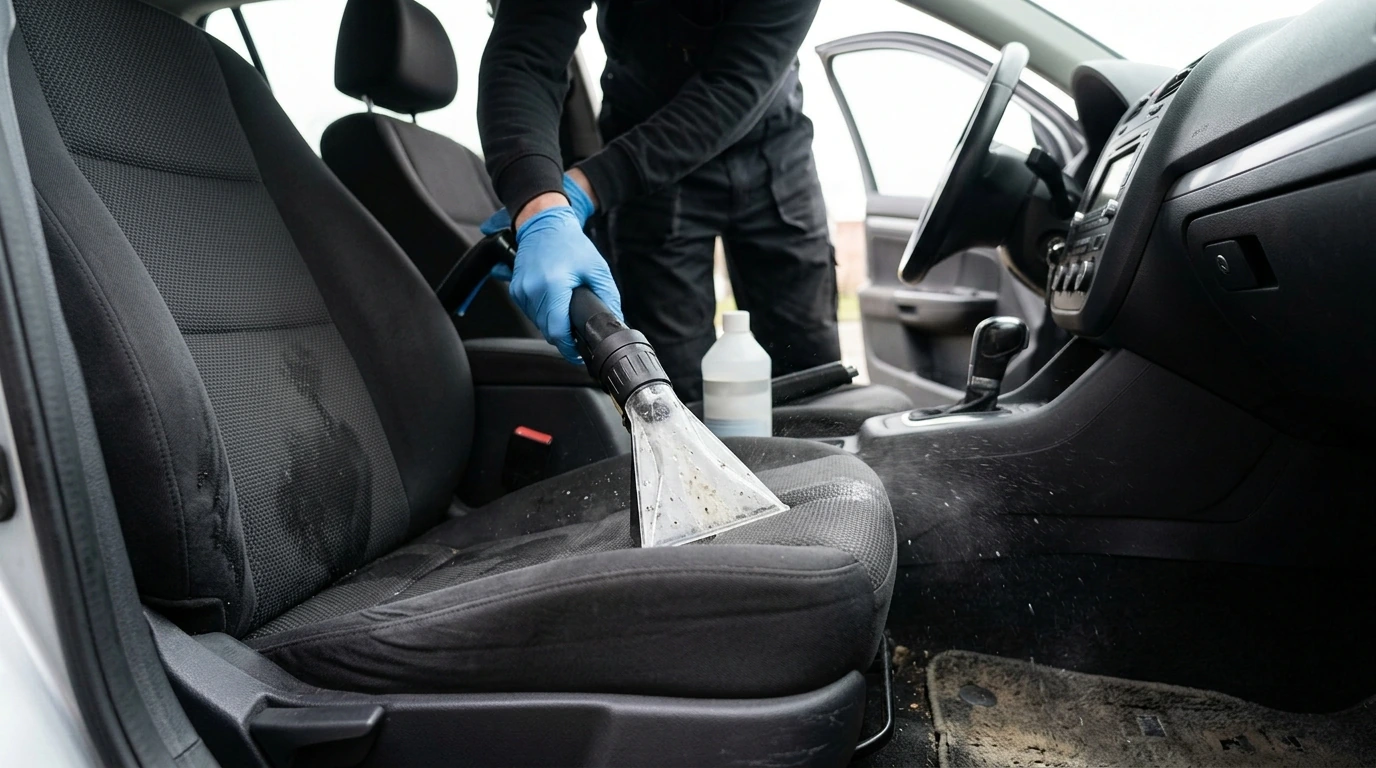
Vacuum thoroughly, including seat seams and under seats. Then shampoo/extract carpets and fabric seats if applicable; smoke odor clings to fibers and the padding beneath. For leather or vinyl, clean with an interior-safe cleaner to remove residue, not just dust. Don’t skip the headliner—use a lightly damp microfiber and gentle cleaner (no soaking) since smoke rises and concentrates there.
3) Treat the HVAC system
Run the fan with fresh air (not recirculate) and clean the intake area near the windshield cowl if accessible. If odor comes out of the vents, the system likely needs an HVAC-safe deodorizing treatment designed to neutralize odor in the ducts and evaporator area.
4) Neutralize remaining odor molecules
After cleaning, use a true odor neutralizer (not a perfume). For persistent cases, professional ozone or chlorine dioxide treatments can be effective—but only after the interior is cleaned, or the treatment will be fighting layers of residue.
For a step-by-step “source to solution” approach that lasts, see the full guide: https://ruleno.com/guide-car-odor-removal-that-lasts-source-to-solution-reset/.
FAQ
Why does smoke smell come back after cleaning?
It usually returns because residue is still embedded in the headliner, seat foam, carpet padding, or the HVAC system. Heat and humidity make those remaining particles off-gas again, so the odor resurfaces.











Leave a comment