Car Clunks When Turning: Causes, Checks, and Fixes
Why a Clunk When Turning Deserves Attention
A clunk when turning usually points to looseness, wear, or missing lubrication somewhere in the steering or suspension. Some causes are minor (like a sway bar link starting to loosen), while others can affect control and braking (like a worn ball joint or tie-rod end). The fastest way to get to the right fix is to narrow the noise down by when it happens—slow vs. fast turns, full lock vs. slight steering input, braking vs. accelerating, smooth roads vs. bumps—then inspect the most likely components before driving long distances.
What a “clunk” During Turning Typically Means
- A single knock at full lock often points to CV joints, strut mounts, or steering stops contacting due to wear or missing lubrication.
- A repeated clunk over small bumps while turning often points to sway bar links/bushings or loose suspension hardware.
- A clunk when turning and braking can indicate loose caliper hardware, worn control arm bushings, or ball joints.
- A clunk when accelerating through a turn may indicate a worn CV joint under load, a shifting engine/transmission mount, or (on some drivetrains) differential backlash.
- Noise location matters: left vs. right wheel well, or a centered thunk you feel in the cabin can change the list of suspects.
Quick Triage: Narrow It Down in Under 10 Minutes
- Recreate safely: Use an empty parking lot, windows down, radio off. Drive slow tight circles both directions.
- Note the pattern: single clunk vs. rapid clicking; only at full lock vs. any steering input.
- Add load changes: repeat while lightly braking, then while lightly accelerating.
- Check for obvious looseness: wheel lug nuts properly torqued, no loose undertray/splash shield, nothing dragging.
- Look for clues: torn CV boots with grease splatter, uneven ride height, fresh rub marks near the tire/strut.
Clunk Characteristics and the Most Common Sources
| When it clunks | How it sounds/feels | Most likely causes | Immediate risk level |
|---|---|---|---|
| Only at full lock (parking maneuvers) | Single knock or dull thud | Strut top mount/bearing, steering stops, outer CV joint beginning to wear | Medium |
| Rhythmic clicking while turning | Fast tick-tick that speeds with wheel speed | Outer CV joint, torn CV boot/loss of grease | High |
| Turning over small bumps | Rattle/clunk from one side | Sway bar end links, sway bar bushings, loose strut bolt | Medium |
| Turning while braking | Clunk plus steering wheel twitch | Control arm bushings, ball joints, loose caliper bracket hardware | High |
| Turning while accelerating | Clunk/knock with load transfer | CV joint under load, engine/trans mounts, worn control arm rear bushing | High |
Most Common Culprits (and What to Look For)
- CV joints/axles: Torn boots, grease splatter, clicking on turns. As wear increases, clicking can progress to clunking and vibration.
- Lower ball joints: Clunk over bumps and during steering; check for torn dust boots and measurable play.
- Control arm bushings: Dull clunk during braking/turn-in; look for cracked rubber, leaking hydraulic bushings, or shifted sleeves.
- Sway bar end links and bushings: Rattle or clunk when turning on uneven pavement; inspect for torn boots and looseness.
- Strut mounts/bearings: Clunk at low speed and a “binding” feel when steering; look for cracked mount rubber or rough rotation.
- Tie rods (inner/outer): Clunk plus vague steering; check for play and damaged boots.
- Brake hardware: Loose caliper bracket bolts or worn pad hardware can clunk when changing direction or braking while turning.
- Engine/trans mounts (common on FWD): Thunk when applying throttle in a turn as the drivetrain shifts.
Safe Driveway Checks (Before Lifting the Car)
- Steering-to-lock check: With the car stationary, turn lock-to-lock and listen for a top-of-strut knock or binding.
- Bounce and listen: Push down firmly on each front corner; a clunk can point to a strut mount or loose components.
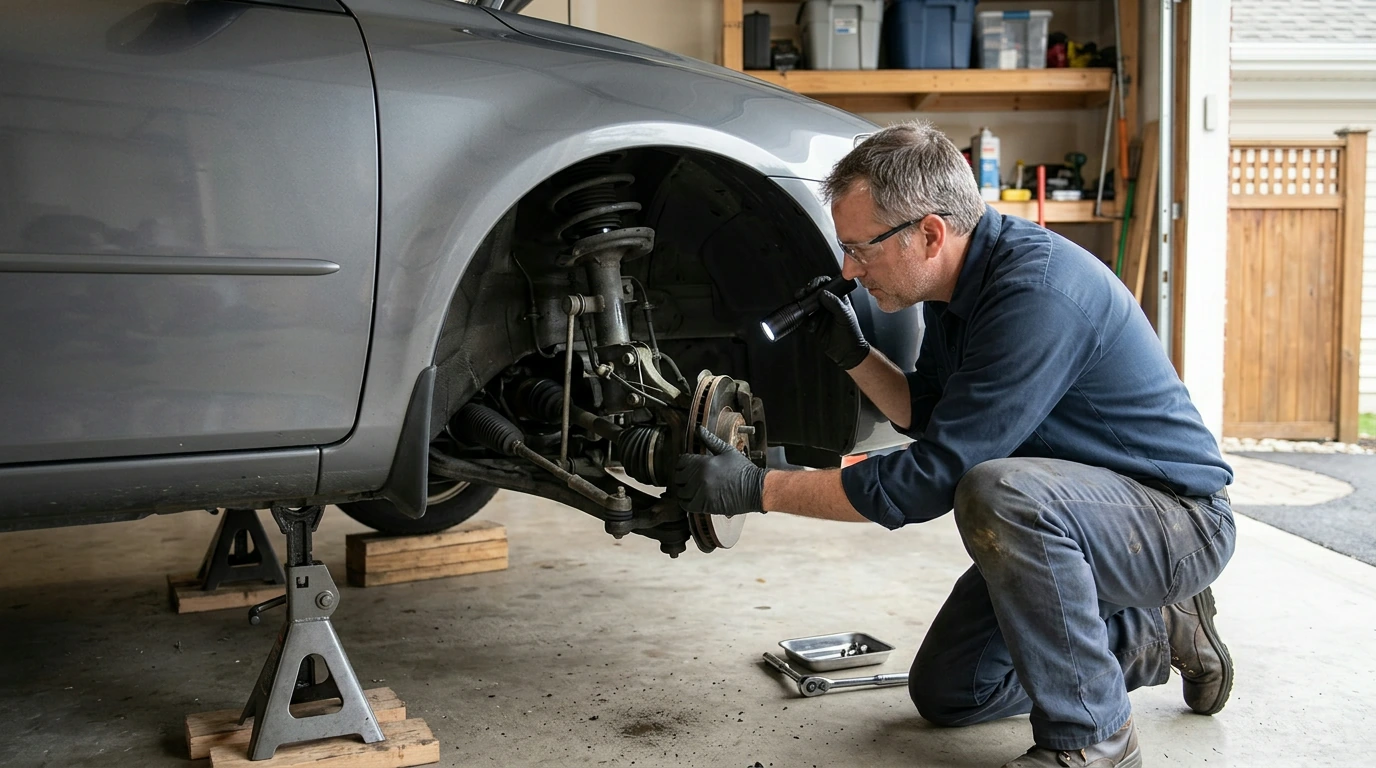
- Visual scan with a flashlight: Inspect CV boots, sway bar links, control arm bushings, and the brake caliper area for missing clips/bolts.
- Wheel check: With the car on the ground, grasp the top of the tire and look for abnormal tilt; obvious movement can indicate serious wear.
- Safety note: Never crawl under a vehicle supported only by a jack—use jack stands on solid ground.
Lifted Inspections (Best Done With Jack Stands)
Repair Options and What Usually Fixes the Noise
When to Stop Driving and Get Immediate Help
Preventing Clunks: Maintenance Habits That Reduce Repeat Noises
Useful References and Store Resources
For recall-related safety items and general maintenance guidance, these references are helpful: NHTSA Vehicle Safety Recalls, Car Care Council – Vehicle Maintenance Basics, and AAA – Car Maintenance and Repair Guidance.
- Why Is the Car Clunking When You Turn? A Complete Guide to Diagnosing, Fixing, and Preventing Car Noises
- AI-Powered Products Made Simple: The Ultimate Guide on How to Use ChatGPT to Create Digital Products, eBooks, Checklists, and More
FAQ
Is a clunk when turning always a CV joint?
No. CV joints are common—especially if you hear rhythmic clicking that speeds up with wheel speed—but sway bar links, ball joints, control arm bushings, strut mounts, tie rods, and even loose brake hardware can create a similar clunk. A dull single knock at full lock often points away from classic CV clicking and toward mounts, stops, or looseness.
Can low power steering fluid cause clunking noises when turning?
Low power steering fluid usually causes whining or groaning, not a clunk. It’s still worth checking the fluid level and looking for leaks, but a true clunk more often comes from worn joints, bushings, mounts, or loose hardware that shifts under load.
What is the most dangerous cause of a clunk while turning?
Loose or worn ball joints and tie-rod ends are among the most dangerous because they can affect steering control, and brake hardware issues can compromise stopping power. If steering feels loose, the clunk worsens quickly, or wheel play is present, limit driving and get the vehicle inspected promptly.










Leave a comment