Best Sports for Weight Loss: Pick One You’ll Keep Doing
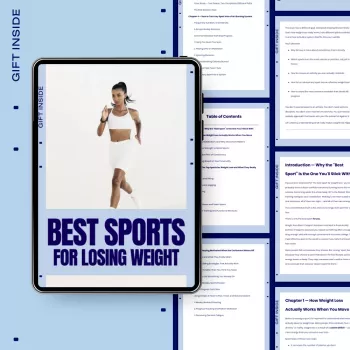
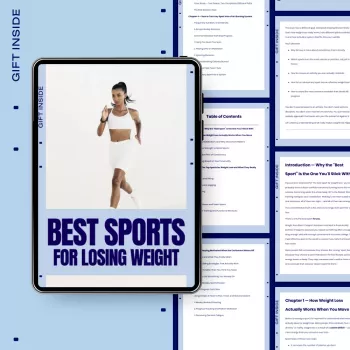
Best Sports for Losing Weight: How to Pick One You’ll Actually Stick With
Some sports burn more calories than others, but the best choice for weight loss is the one that fits your schedule, joints, budget, and personality long enough to become routine. Use the guide below to match sports to goals (fat loss, fitness, stress relief), then build a simple weekly plan that makes consistency easier than willpower. For general health benchmarks that support weight management, see the CDC’s adult activity guidelines.
What makes a sport effective for weight loss
Calorie burn per session matters, but weekly consistency and total training time usually matter more than a single “hard” workout. A sport you can repeat four or five times per week (even at a moderate intensity) often outperforms something extreme that wipes you out for days.
Sports with built-in changes of pace—stop-and-go games, hill work, or intervals—tend to feel more engaging while also raising overall energy expenditure. Many of these activities also include muscle-building elements like sprints, jumps, and strong pulls or pushes, which support body composition and metabolic health.
Just as important: injury risk and soreness decide whether you can train next week. If impact or joint stress is high for your current fitness level, choose a lower-impact option and build volume first. Appetite can also shift; long endurance sessions increase hunger for some people, so a mix of moderate cardio plus basic strength work can feel more sustainable. For a deeper evidence-based overview, the American College of Sports Medicine outlines how activity supports weight management over time.
A practical match: sports by impact level and accessibility
Low-impact options are often easiest to repeat when starting out or managing joint pain—think swimming, cycling, rowing, and brisk walking. Moderate-impact sports (tennis, hiking, dancing, controlled martial arts) add variety and conditioning without as much pounding as running-heavy games. High-impact sports like basketball and soccer can be fantastic for fitness if your body tolerates them, but they often require a base of conditioning to keep soreness and tweaks from derailing your schedule.
Accessibility is the quiet deal-breaker. Distance to a facility, weather dependence, required gear, and whether you need a partner/team all add “friction.” The best sport is often the one with the lowest friction on a random Tuesday.
Quick comparison of popular sports for weight-loss consistency
| Sport | Impact | Why it helps | Best for | Common barrier | Simple starter plan |
|---|---|---|---|---|---|
| Brisk walking / power walking | Low | Easy to do often; builds base conditioning | Beginners, busy schedules | Boredom, pace too easy | 30–45 min, 4–6x/week; add hills 1–2x |
| Cycling (outdoor or stationary) | Low | High volume without joint pounding | Knee/hip-friendly cardio | Setup time, traffic/weather | 25–40 min, 3–5x/week; include 5×1-min harder efforts |
| Swimming | Low | Full-body work; low joint stress | Joint pain, heat sensitivity | Pool access, technique | 20–30 min, 3x/week; alternate easy/moderate laps |
| Rowing (erg) | Low–Moderate | Full-body power + cardio | People who like structured sessions | Technique, lower back fatigue | 15–25 min, 3x/week; 10×30-sec brisk/60-sec easy |
| Tennis / pickleball | Moderate | Intervals built into play; social factor | Those who enjoy games | Scheduling partners/courts | 60 min, 2–3x/week; add 20-min easy walk on off days |
| Basketball / soccer | High | High intensity; lots of movement and fun | Team-motivated personalities | Injury risk, soreness | 45–60 min, 1–2x/week; build base with low-impact cardio |
| Dance fitness | Moderate | Enjoyable; improves coordination and stamina | People who dislike “workouts” | Finding a style you like | 30–50 min, 3–4x/week; repeat favorite routines |
If fat loss is the goal: the “best” sports for steady weekly calorie burn
Walking and hiking are reliable because recovery cost stays low. More weekly minutes is usually the simplest lever for fat loss, and walking scales well: longer routes, steeper hills, faster pace, or a weighted pack once your joints feel great.
If sticking with it is the goal: choose a sport that fits your personality
Stress relief priority: outdoor hiking, swimming, or rhythmic steady-state cardio can improve mood and sleep—two factors that often support better food choices and consistency. For additional weight-focused guidance, the NIH’s Aim for a Healthy Weight resources are a helpful companion.
A simple weekly template that supports weight loss without burnout
Common obstacles—and how to solve them quickly
Guides and tools that make follow-through easier
If picking a sport (and sticking with it) feels like the hardest part, a structured guide can reduce guesswork and help you choose based on impact level, access, scheduling, cost, and enjoyment. A practical option is Best Sports for Losing Weight – Practical eBook Guide to Finding the Best Sport for Weight Loss That You’ll Actually Stick With.
If you prefer building simple trackers, checklists, or a lightweight training journal to stay consistent, AI-Powered Products Made Simple: The Ultimate Guide on How to Use ChatGPT to Create Digital Products, eBooks, Checklists, and More can help you set up a straightforward system you’ll actually use.
FAQ
Which sport burns the most calories for weight loss?
High-intensity sports (like basketball, soccer, fast rowing intervals, or hard cycling) can burn more calories per minute, but results usually come from total weekly minutes and consistency. The best “calorie burner” is the one you can repeat without getting injured or overly sore.
Is walking enough to lose weight?
Yes—walking can support a calorie deficit, especially when you increase weekly minutes, add hills, or pick up the pace. It pairs well with strength training, and for many people it’s the most sustainable place to start.
How many days a week should a sport be done to lose weight?
A practical range is 3–6 days per week, starting lower and building up as recovery improves. Mixing easy, moderate, and one harder session tends to work better than pushing hard every day.









Leave a comment