Almond Oil Rituals Pack: 3-Step Glow for Skin, Hair, Nails
Almond Oil Beauty Rituals Pack: 3 Simple Rituals for Skin, Hair, and Nails
Almond oil is a lightweight, nutrient-rich oil commonly used to soften dry skin, smooth frizz, and support a healthier-looking glow. A ritual-based approach makes it easier to use consistently without over-applying or mixing it with products that don’t pair well. Below are practical routines, what to look for in a quality almond oil, and a simple 3-in-1 format you can repeat for face/body, hair, and nails. For more guidance, see Sweet Almond Oil for Skin — Benefits, How to Use & Safety.
Why almond oil fits so many beauty routines
Almond oil earns a spot on bathroom counters because it’s versatile without feeling heavy. As an emollient, it helps reduce the tight, dry feeling that can show up after cleansing by sealing in moisture—especially when applied after water-based steps. Its naturally lipid-rich profile also helps rough patches (like elbows, knees, and hands) feel smoother and more supple. For further reading, see 3 Ways to Incorporate Almond Oil in Your Beauty Routine.
On hair, almond oil is often used for shine and manageability on lengths and ends, particularly when heat styling or dealing with humidity. And because it can be used in tiny amounts across multiple areas—skin, cuticles, brows—a single product can support several habits without adding clutter. The simplest pairings tend to work best: cleanse → damp skin → a few drops of oil, or shampoo → towel-dry → oil on ends.
What’s inside a 3-in-1 beauty rituals approach
A structured “pack” mindset helps prevent common mistakes: using too much oil, applying it at the wrong time, or skipping it until dryness flares up. Think of these as three repeatable mini-routines with clear timing, amounts, and placement.
- Face/body ritual: hydration layering (water first, oil second) with targeted dry-zone focus.
- Hair ritual: precise placement (mid-lengths to ends) to avoid weighed-down roots.
- Nails/cuticles ritual: frequent micro-applications for a cleaner, healthier-looking nail area.
Quick ritual planner (amounts and timing)
| Ritual | When to use | How much | Best placement | Common mistake to avoid |
|---|---|---|---|---|
| Face & body moisture seal | After shower or cleansing | 2–6 drops (more for body) | Damp skin; focus on dry zones | Applying to completely dry skin without any hydration layer |
| Hair smoothing & shine | After wash or before styling | 1–3 drops | Mid-lengths and ends | Applying at roots or using too much at once |
| Cuticle and nail softening | Daily or after handwashing | 1 drop total for all nails | Cuticles and nail plate | Over-oiling then immediately washing hands |
Face and body ritual: soft, dewy skin without feeling greasy
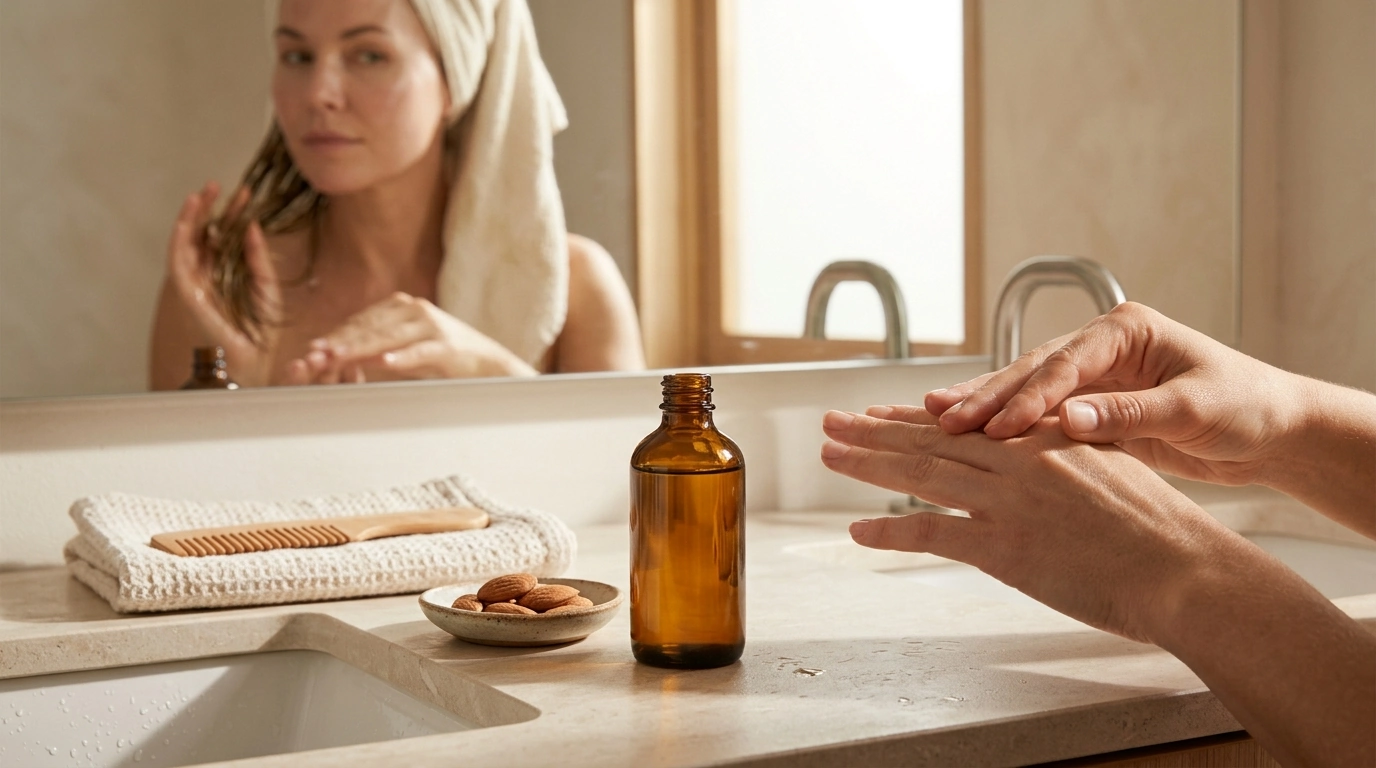
For face and body, almond oil performs best when it’s sealing in hydration rather than trying to replace it. Start with clean skin, then add water-based hydration: a light lotion, a hydrating toner, or simply leaving skin slightly damp after rinsing.
- Warm and spread: Rub a few drops between palms before applying. This improves spread so you’re less likely to overdo it.
- Press—don’t scrub: Press oil onto cheeks, forehead, and neck. On the body, glide over arms and legs and spend extra time on rough patches.
- Very dry areas: Layer a thicker cream first, then add a thin oil layer to reduce moisture loss.
- If you wear makeup: Give the finish a few minutes to settle, or reserve facial oil for nighttime while using it more freely on the body.
- Seasonal tweaks: Use less in humid weather; use slightly more in dry, heated indoor environments.
For dry-skin fundamentals that pair well with oils, the American Academy of Dermatology’s guidance on gentle cleansing and moisturizing can help refine the basics: AAD — Dry skin: Self-care.
Hair ritual: shine, frizz control, and softer ends
The difference between glossy and greasy is usually placement and amount. Almond oil is best used on towel-dried hair because a little water helps distribute it evenly and prevents concentrated, heavy spots.
Nails, cuticles, and hands: the fastest ritual with visible payoff
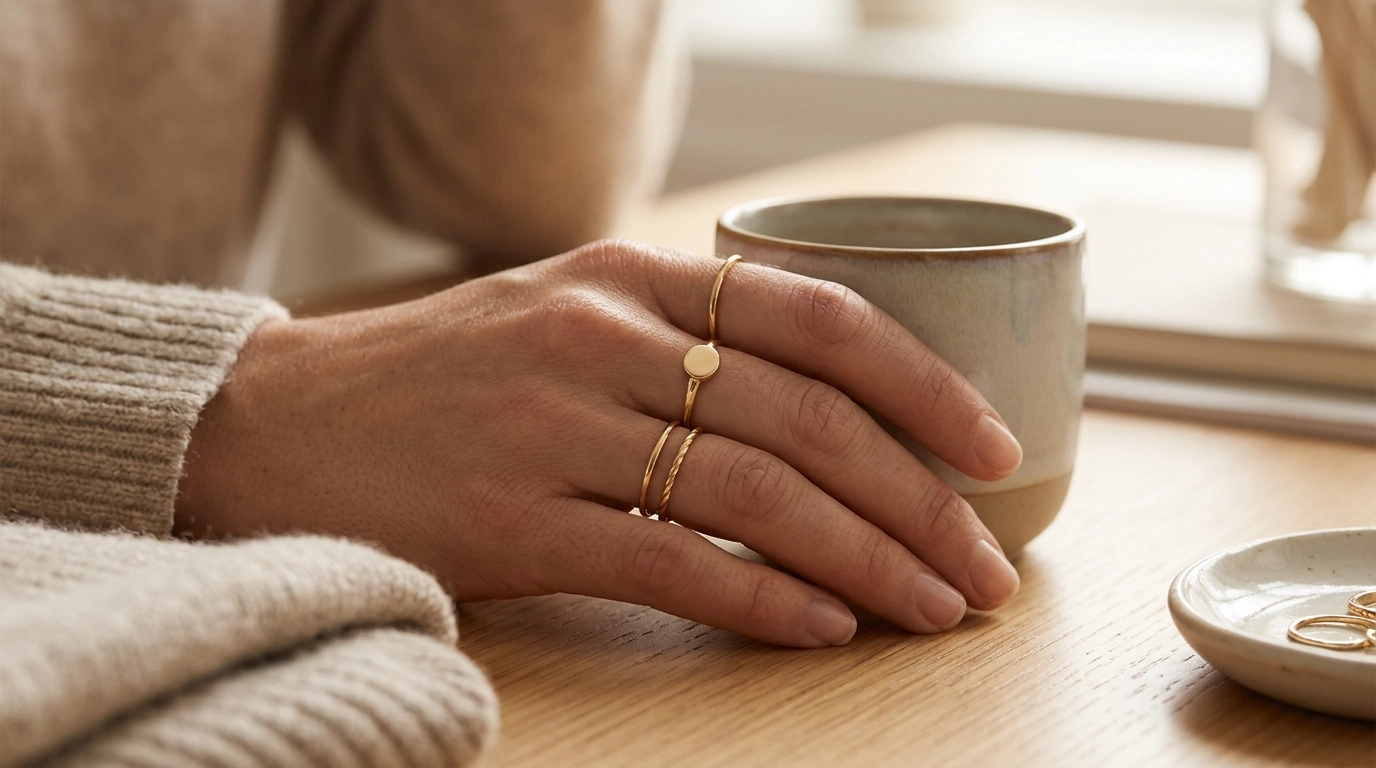
If you like a finished look after your nail routine, a simple accessory can make hands look more put-together: Personalized Gold-Plated Alphabet Rings.
Choosing a quality almond oil and storing it well
For broader product-safety context, the FDA’s cosmetics overview is a helpful reference: FDA — Cosmetics Safety. If you’re using oils alongside other scented products, it’s also worth knowing that “essential oils” are a separate category with their own cautions: NCCIH — Essential Oils.
Safety notes and who should be cautious
Shop the ritual-friendly pick
If you want the steps organized so they’re easier to repeat across skin, hair, and nails, explore Almond Oil Beauty Rituals Pack | Beauty Benefits of Almond Oil 3-in-1 Guides.
FAQ
Can almond oil be used on the face every day?
Daily use is common when you keep the amount small. Apply a few drops over damp skin or on top of moisturizer, patch test first, and use extra caution if you’re acne-prone or allergy-prone.
Does almond oil help with hair growth?
Almond oil doesn’t directly create new hair growth. It can improve softness and reduce the look of dryness and breakage, helping hair look healthier as part of an overall routine.
What’s the difference between sweet almond oil and bitter almond oil for beauty use?
Sweet almond oil is the standard cosmetic carrier oil used for skin and hair. Bitter almond oil is not used interchangeably and may have different safety considerations, so it’s best to choose sweet almond oil for beauty routines.









Leave a comment