Best 70-Mile TV Antenna: Outdoor vs Indoor Picks
Which TV antenna has a 70 mile range?
If you’re shopping specifically for a 70-mile TV antenna, you’ll typically be looking at two styles: a higher-gain outdoor antenna (roof, mast, or attic install) or a powered “long-range” indoor antenna that includes an amplifier. In real homes, that “70 miles” number is a best-case rating—your walls, nearby buildings, and local terrain can reduce what you actually receive. Our team’s goal is to help you pick the right type for your setup so you get stable channels, not just a big number on the box.
The most reliable choice: an outdoor/attic long-range antenna rated around 70 miles
If you’re truly trying to pull stations from far away, a directional outdoor or attic antenna rated for about 70 miles is usually the safest bet. Directional models focus reception toward your broadcast towers, which improves signal strength and reduces dropouts compared with many flat indoor styles. An attic install often performs close to outdoor performance while keeping the antenna protected from weather.
When an indoor “70-mile” antenna can work
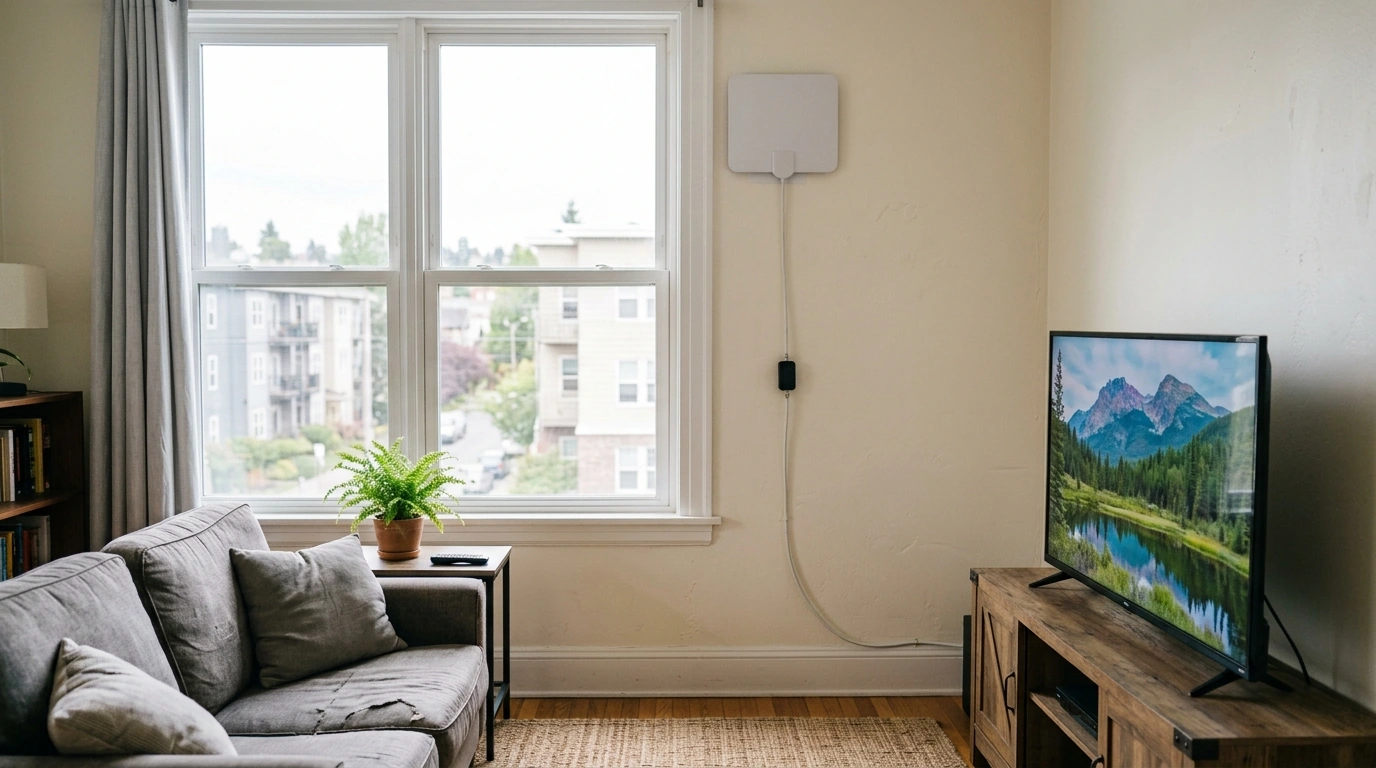
A powered indoor antenna labeled 70 miles can be a good fit when you’re relatively close to towers but dealing with signal-killing obstacles like thick walls or a lower floor. Place it on an exterior wall or in a window facing the towers, keep it away from metal screens, and run the shortest coax line you can. If your area has strong signals, too much amplification can overload reception, so choose an amp you can switch off or adjust.
What to look for so “70 miles” translates into real reception
Prioritize UHF performance (most modern broadcasts), solid build quality, and a low-noise amplifier if you need boosting. If you have multiple TVs, plan for a distribution amplifier rather than relying on a single inline booster. For step-by-step placement and booster tips that can make a bigger difference than the printed range, see our guide: https://ruleno.com/guide-500-mile-indoor-hdtv-antenna-setup-booster-tips/.
FAQ
Do I need a preamp or booster for an indoor antenna?
You may need a booster if your channels pixelate or drop out due to long coax runs or weak signals in your room. If you’re close to towers, a booster can hurt reception, so use one with an on/off switch when possible.











Leave a comment