Perfect Socks Made Simple: Lengths, Materials & Fit

A smart sock drawer removes daily friction: fewer mismatched pairs, better comfort in every shoe, and cleaner outfit lines. This guide breaks down everyday sock types (crew, no-show, and more), what materials and construction details actually change comfort, and a simple checklist to standardize what to keep, what to replace, and what to buy next.
Start With the Sock Jobs You Actually Need Covered
Before you buy another multipack, match socks to real scenarios you repeat weekly. Your “perfect pair” depends less on trends and more on what your feet do all day.
- Map socks to your real week: workday shoes, casual sneakers, training, boots, lounging, and dress occasions.
- Pick 1–2 defaults: one go-to everyday option and one low-profile option covers most mornings; add a few specialty pairs for edge cases (blisters, heat, long walks, formal outfits).
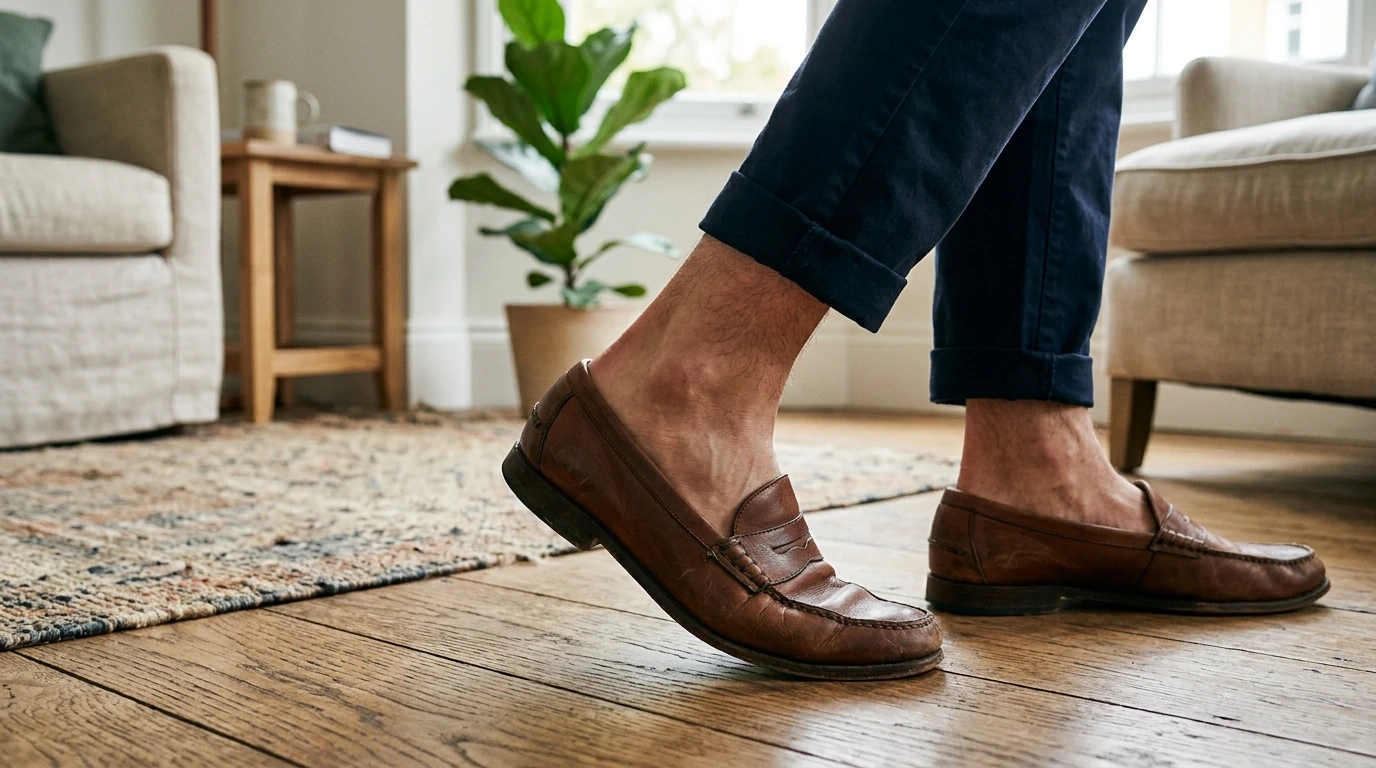
- Use shoe type as the anchor: low-cut sneakers push toward no-show/low-cut; boots push toward crew/boot height; loafers often need a true no-show with strong heel grip.
- Set a realistic rotation: keep enough pairs to cover your laundry cadence plus a small buffer for travel, gym bags, and “nothing clean” surprises.
Sock Lengths and When Each Looks Best
Length is both a style choice and a comfort choice. The right height prevents rubbing, improves fit, and keeps outfit lines clean.
Quick definitions that make shopping easier
- No-show socks: designed to disappear in low-profile shoes; best when ankle exposure is part of the outfit line (shorts, cropped pants).
- Low-cut/ankle socks: visible at the shoe collar; practical for walking and training where a no-show slips, while keeping a casual silhouette.
- Crew socks: the everyday workhorse; balances comfort, warmth, and shoe protection; works with sneakers, casual shoes, and many boots.
- Over-the-calf (dress): stays up under tailored trousers and reduces skin show when seated; ideal for formalwear and dress shoes.
Rule of thumb for clean proportions: in business or formal settings, avoid a visible “strip” of bare leg between sock and trouser hem when you sit down or cross your legs.
Quick Match Guide: Sock Type by Shoe and Outfit
| Shoe / Outfit | Best sock length | What to look for | Common mistake to avoid |
|---|---|---|---|
| Low-top sneakers + shorts | No-show or low-cut | Silicone heel grip, snug cuff, breathable knit | No-show that slips and bunches under the arch |
| Running/training shoes | Low-cut or crew | Cushioned zones, moisture-wicking fibers, arch support | Cotton-heavy socks that stay damp |
| Casual sneakers + jeans | Crew | Medium cushion, durable heel/toe reinforcement | Thin socks that wear through quickly |
| Boots (work or hiking) | Crew (boot height) or higher | Thicker cushion, merino blend, taller shaft | Too-thin socks that cause hot spots |
| Dress shoes + trousers | Over-the-calf or dress crew | Fine gauge knit, smooth toe seam, stays up | Ankle socks showing skin when seated |
Materials That Change Comfort (and How to Choose)
Fabric content decides how a sock handles sweat, temperature swings, and repeated washing. The best choice is usually a blend—not a single fiber.
- Merino wool blends: temperature-regulating and odor-resistant, making them a strong all-season option. For longevity, look for merino blended with nylon.
- Cotton blends: soft and common for casual wear; they perform best when paired with synthetics to reduce dampness and improve shape retention.
- Synthetic performance blends (polyester/nylon/elastane): quick-drying and durable; ideal for training days and hot climates.
- Bamboo/viscose blends: often feel silky and breathable; check for enough elasticity so the sock doesn’t stretch out by midday.
- Blend check: prioritize reinforcement fibers (often nylon) and stretch (elastane/spandex) to prevent sagging and premature holes.
For deeper foot-health basics and comfort considerations, browse resources from the American Podiatric Medical Association.
Construction Details That Prevent Annoyances
Two socks with the same “material” can feel completely different because of construction. These details are the difference between “fine” and “favorite.”
- Cushion mapping: targeted cushioning under heel/forefoot can reduce impact without making shoes feel tight.
- Arch support band: helps reduce sliding and bunching, especially in no-show socks.
- Seams: a smoother toe seam improves comfort in dress shoes and on long walking days.
- Heel grip: silicone or textured knit helps no-shows stay put; prioritize this over “one-size” claims.
- Shaft tension: crew socks should stay up without leaving deep marks; if they cut in, size up or switch to softer ribbing.
- Reinforced heel/toe: increases lifespan; especially helpful if you regularly wear through socks in the same spots.
If you’re unsure what those wash icons mean on packaging, the ISO standard overview of wash-care symbols is a helpful reference: Textile Exchange.
A Simple Checklist to Build a Smart Sock Drawer
Care Habits That Make Socks Last Longer
Make It Easy: Digital Guide and Printable Checklist
- Find Your Perfect Pair of Socks – Digital Style Guide & Checklist for Everyday Socks, Crew Socks, No-Show Socks & Building a Smart Sock Drawer
- AI-Powered Products Made Simple: The Ultimate Guide on How to Use ChatGPT to Create Digital Products, eBooks, Checklists, and More
FAQ
How many pairs of socks should a minimalist sock drawer have?
A practical range is 10–14 everyday pairs based on laundry frequency, plus a small set of specialty socks (2–4 total across dress, boots, and training). Standardizing colors and models usually means you can own fewer pairs without running short.
Why do no-show socks slip, and how can it be prevented?
No-shows slip when the heel shape doesn’t match your foot, elastics are too weak, or there’s not enough grip at the back. Look for silicone heel grips, an arch band, correct sizing, and slightly more structure (not ultra-thin) on active days.
Are wool socks only for winter?
Merino wool helps regulate temperature and resist odor, which can make it comfortable year-round. Choose lighter merino blends for warm weather and thicker, more cushioned pairs for boots and cold conditions.










Leave a comment