3-in-1 Movable 3D Puzzle: Train, Car & Jeep Build
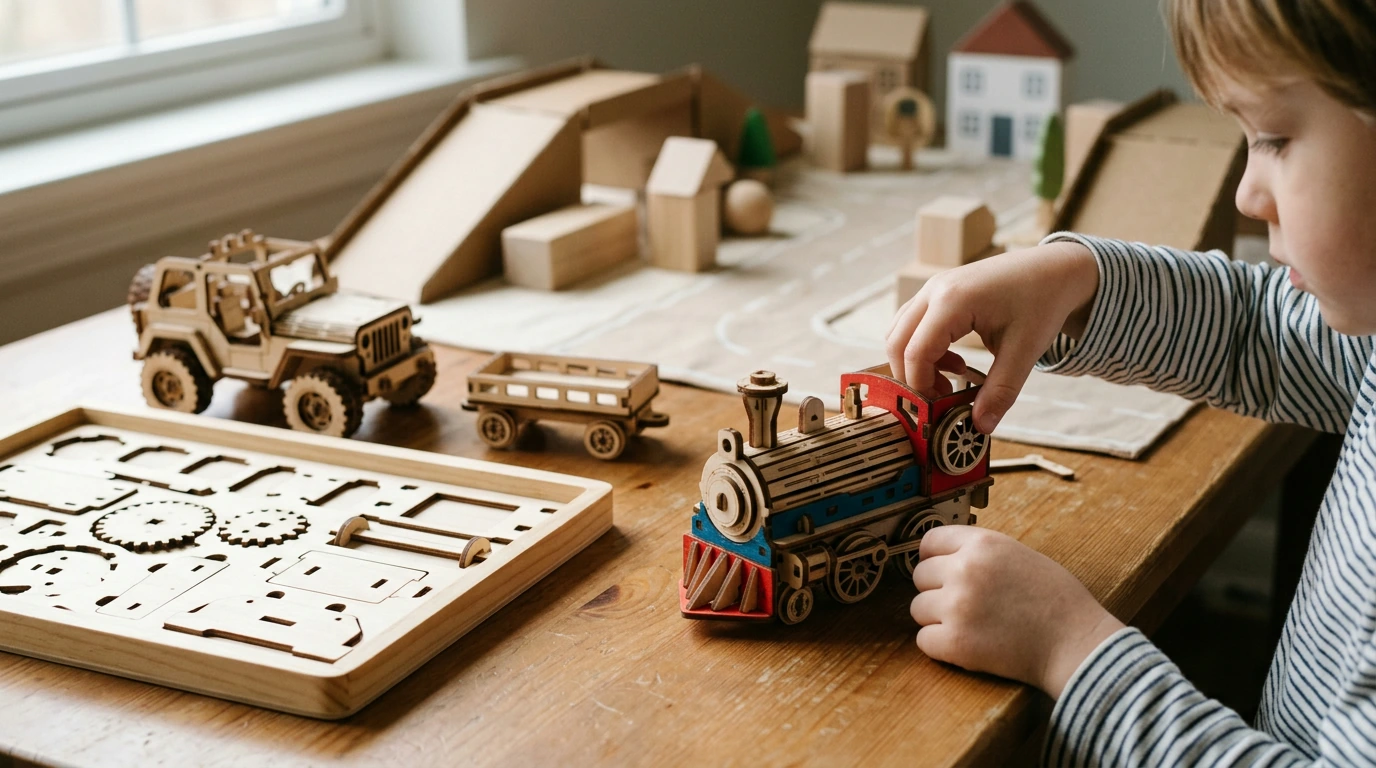
Movable Steam Train, Car, Jeep 3D Puzzle Assembly Toy: Build, Roll, Repeat
Some toys shine brightest before they’re even “done.” The Movable Steam Train, Car, Jeep 3D Puzzle Assembly Toy starts as flat puzzle-style pieces and turns into three classic vehicles—a steam train, a car, and a jeep—ready to move across the floor or a tabletop setup. It’s a build-and-play set that keeps hands busy during assembly and keeps imaginations moving once the wheels (and train parts) are in place.
What makes this set different
- Three vehicle themes in one set: a steam train, a car, and a jeep encourage different kinds of stories and play.
- Build-first satisfaction: the fun begins with sorting, fitting, and following steps—then pays off with something you can actually roll and handle.
- Made for hands-on play: the finished models are intended to be moved around, not kept behind glass.
- Easy to share: great for family time, classroom activity stations, or a focused rainy-day project.
What’s included and how it comes together
This is a 3D assembly experience built around interlocking puzzle parts. Instead of one combined build, you’ll create three separate models—so it’s easy to pause without losing momentum.
- Puzzle-style parts: pieces interlock to form 3D vehicle bodies and details.
- Separate builds: complete one model at a time to keep pieces organized and progress clear.
- A typical build flow: sort pieces, assemble a base, add body panels, then attach movable elements.
- Movement depends on alignment: careful connections help the models roll and move more smoothly after assembly.
Because the finished vehicles are meant to be handled, the best results usually come from steady pressure and patient fitting rather than rushing connections.
Skills it helps develop
Beyond the “cool, it moves” factor, this kind of set supports hands-on learning in a way that feels like play from start to finish.
- Fine motor practice: pressing, aligning, and connecting small parts strengthens hand control.
- Spatial reasoning: turning flat shapes into a 3D object reinforces geometry and visual planning.
- Patience and sequencing: following an ordered build process supports attention and step-by-step thinking.
- Collaborative building: ideal for taking turns—one person sorts pieces while another assembles.
Assembly tips for a smoother build
A few small habits can make the build feel calmer and help the finished vehicles move better.
- Sort first: group pieces by shape or type before starting to reduce backtracking.
- Dry-fit parts: test a connection before fully pressing it into place.
- Use a tray or mat: it keeps small parts from sliding away mid-step.
- Don’t force connections: if something feels stuck, re-check orientation; most parts lock in with steady pressure rather than bending.
- Finish one vehicle at a time: it’s the simplest way to prevent mix-ups and keep momentum.
Play ideas once the vehicles are built
Once all three are ready to roll, the set becomes a flexible play kit—especially fun when you build a “world” for each vehicle to explore.
- Create a mini transport town: make a station, roads, and an off-road route using books as bridges, tape lines as streets, or cardboard ramps as hills.
- Story prompts: cargo delivery by train, a city commute by car, and a wilderness rescue by jeep.
- Timed challenges: set up a simple course and see which vehicle rolls farthest with one push.
- Display option: set the trio on a shelf as a rotating “build-of-the-week” showcase.
Safety and age guidance
Because 3D puzzle builds often involve smaller parts and tighter connections, it’s smart to match the set to the builder’s comfort level and supervise when needed.
- Check for small parts: supervise younger children and keep spare pieces out of reach.
- Inspect connections after assembly: make sure pieces are fully seated before active play.
- Avoid high drops and heavy pressure: these models typically last longer with tabletop and floor play rather than rough outdoor use.
- Store unused pieces safely: especially around toddlers and pets.
For broader toy safety guidance, the U.S. Consumer Product Safety Commission provides helpful tips at CPSC Toy Safety. Safety requirements and testing norms are also outlined under ASTM F963.
Quick details at a glance
Use this summary to confirm fit for your space, gifting needs, and build difficulty preferences.
| Feature | Details |
|---|---|
| Product | Movable Steam Train, Car, Jeep 3D Puzzle Assembly Toy |
| Build types | Steam train, car, jeep |
| Play style | Assembly + movable model play |
| Best for | Puzzle fans, vehicle lovers, hands-on learning activities |
| Price | $16.82 (USD) |
| Availability | In stock |
Gifting and occasion ideas
This set fits nicely into the “experience gift” category—something to do together, then play with afterward.
If you’re putting together a small bundle, a simple add-on like Personalized Gold-Plated Alphabet Rings can make the gift feel more personal, and AI-Powered Products Made Simple: The Ultimate Guide is a handy pick for adults who enjoy creative projects beyond the build.
Care, storage, and keeping models rolling
Ready to build your trio? The Movable Steam Train, Car, Jeep 3D Puzzle Assembly Toy is available now for an easy build-and-play activity that keeps the fun moving.
FAQ
Does the set include three separate builds or one combined model?
It includes three distinct models: a steam train, a car, and a jeep. Building one vehicle at a time helps keep pieces organized and makes it easier to take breaks.
Are the finished vehicles sturdy enough to play with?
They’re designed to be handled and moved, not just displayed. Proper alignment during assembly and gentler play (especially avoiding hard drops) will help them last longer.
What age group is it best for?
It’s best for kids and teens who can follow step-by-step assembly and handle small parts with care. Adult supervision is recommended for younger children, particularly during sorting and building.










Leave a comment