How to Style a Modern Electroplated Abstract Sculpture
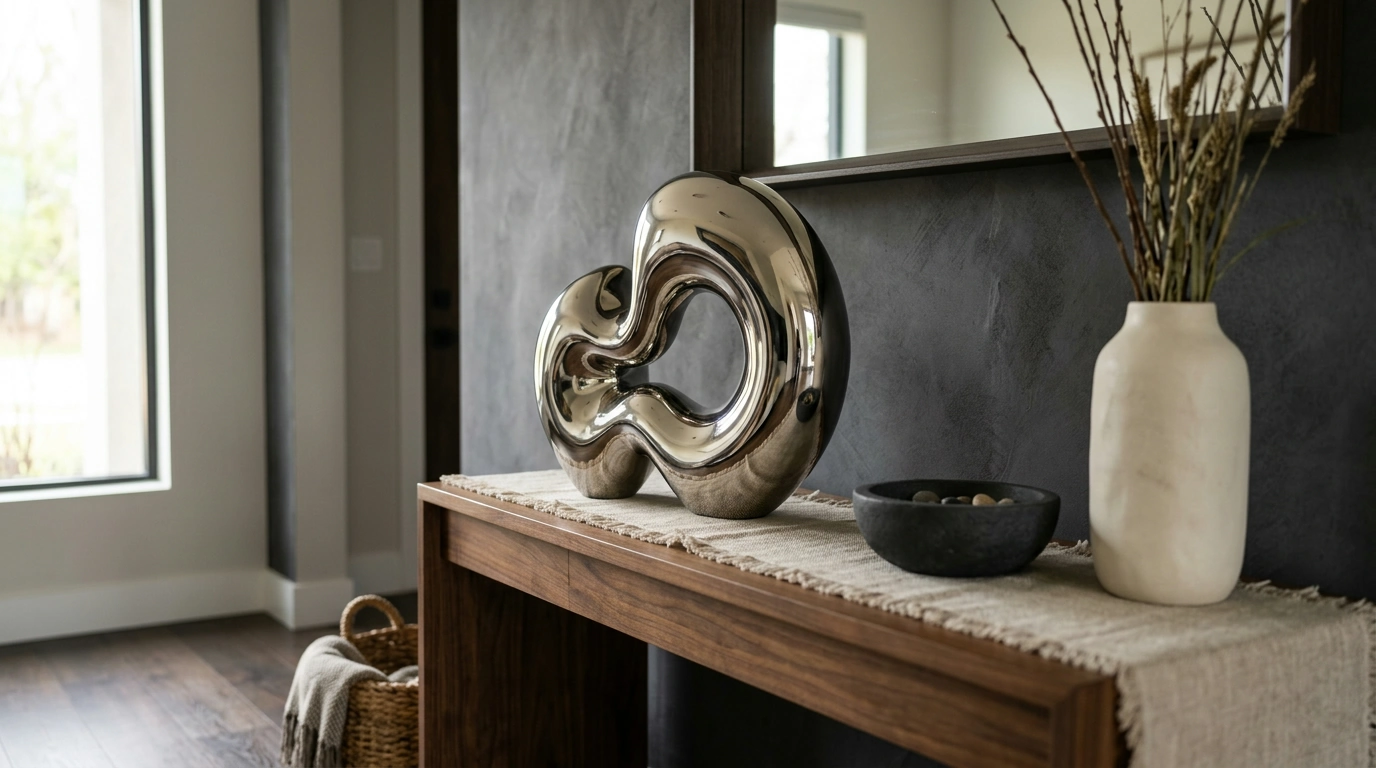
A polished, electroplated abstract sculpture adds instant focal-point energy—catching light, sharpening a room’s lines, and elevating surfaces from “styled” to “gallery-like.” The right piece can make an entry feel more intentional, give a shelf a clean point of emphasis, and pull mixed materials together by reflecting what’s around it. Below are practical ways to place and style a reflective sculpture, what to check before buying, and how to keep a plated finish looking brilliant.
What Makes an Electroplated Abstract Sculpture Stand Out
Electroplated finishes are designed for shine. That high-reflective surface amplifies both daylight and lamplight, so the form feels different as you move through the room—highlights shift, curves sharpen, and edges read more sculpturally.
Abstract shapes also age well visually because they don’t depend on a single motif. They can sit comfortably in modern, minimalist, contemporary luxe, or transitional spaces—especially when the room already leans on strong line, negative space, and a restrained color palette.
Another quiet advantage: a reflective sculpture “connects” surrounding colors and textures by mirroring them. A walnut console, a linen runner, and a stone bowl can look more cohesive when a polished object bounces their tones back into the vignette. For a helpful baseline on how sculpture functions as an art form, see the Tate glossary entry on sculpture.
Where It Works Best at Home
Placement matters more with reflective decor because it interacts with light, wall color, and nearby objects. These spots tend to deliver the most impact with the least effort:
- Console table in an entry: Pair it with a tray for keys and a small vase to balance scale; place the sculpture slightly off-center for a curated look that doesn’t feel staged.
- Living-room shelving: Use it as a focal object among books and matte ceramics; leave breathing room around it so reflections don’t read as clutter.
- Dining-room sideboard: Complements glassware and metallic accents; position near a lamp to create evening sparkle without relying on overhead lighting.
- Home office: Adds visual interest behind the desk or on a credenza; reflective surfaces can make a compact office feel brighter and more open.
- Bedroom dresser: Keep styling minimal—one sculpture plus one soft element (a fabric shade or linen runner) to avoid an overly glossy composition.
Styling Ideas: Pairing With Color, Texture, and Light
The most elevated styling approach is usually restraint: one strong sculptural element supported by calmer textures.
- Balance shine with matte: Place it near stone, concrete, plaster, or unglazed ceramics so the reflective finish feels intentional rather than loud.
- Use contrast for clarity: Dark backgrounds (a charcoal wall or walnut wood) sharpen the silhouette; pale backgrounds make the reflections the star.
- Layer heights: Combine it with a shorter bowl and a taller vase or lamp to create a pleasing “step” without crowding the sculpture.
- Choose lighting deliberately: Warm bulbs soften reflections; cooler bulbs make the piece feel more architectural. Side lighting emphasizes contours and depth.
- Anchor it visually: A low tray or book stack helps define the sculpture as a centerpiece rather than a floating object on a large surface.
If you enjoy the “design language” behind why line, shape, form, and space matter in styling, the Met’s overview of the elements of art is a useful reference for understanding why an abstract object can feel so finished in a room.
Finish and Material Considerations Before Buying
Because reflective pieces reveal what matte objects can hide, small details make a big difference.
Quick Placement Guide for Reflective Abstract Sculptures
| Location | Best Backdrop | Lighting Tip | Styling Pair |
|---|---|---|---|
| Entry console | Neutral wall or mirror | Table lamp to one side | Small catchall tray |
| Living-room shelf | Books + matte pottery | Soft ambient + side light | Stacked books |
| Dining sideboard | Dark wood or textured wall | Warm bulbs for glow | Low bowl or vase |
| Office credenza | Minimal décor, clean lines | Task light angled away from glare | One framed print |
Care and Cleaning for an Electroplated Surface
For broader best practices on caring for decorative objects and finishes, the Smithsonian Museum Conservation Institute’s guidance is a strong, practical resource.
Gift and Occasion Ideas
For a smaller, personalized add-on that still feels polished and giftable, consider Personalized Gold-Plated Alphabet Rings—an easy way to tie a present to an initial or meaningful letter.
Featured Piece: Modern Electroplated Abstract Art Sculpture
Modern Electroplated Abstract Art Sculpture is designed to function as a focal accent on consoles, shelves, and sideboards, adding reflective dimension to contemporary interiors. Its high-shine surface pairs especially well with matte ceramics, natural stone, and dark wood—materials that keep the overall styling balanced and intentional.
FAQ
How should an electroplated sculpture be cleaned without damaging the finish?
Dust with a dry microfiber cloth, then use a slightly damp microfiber for fingerprints or smudges and dry immediately. Avoid abrasive pads and harsh chemicals, and handle by the base to minimize new marks.
Will a reflective abstract sculpture look too shiny in a minimalist room?
A single reflective piece often works well in minimalist spaces because it can serve as the one intentional focal point. Keep surrounding items matte and simple, and use warm, controlled lighting to soften the shine.
Where should a statement sculpture be placed for the best impact?
An entry console, a dining sideboard, or a shelf with negative space tends to show it best. Use a clean backdrop for silhouette contrast and add side lighting to emphasize the contours.









Leave a comment