Car Odor Removal That Lasts: Find Sources & Reset Fast
Eliminating Car Odors for Good: A Fresh Interior Reset That Lasts
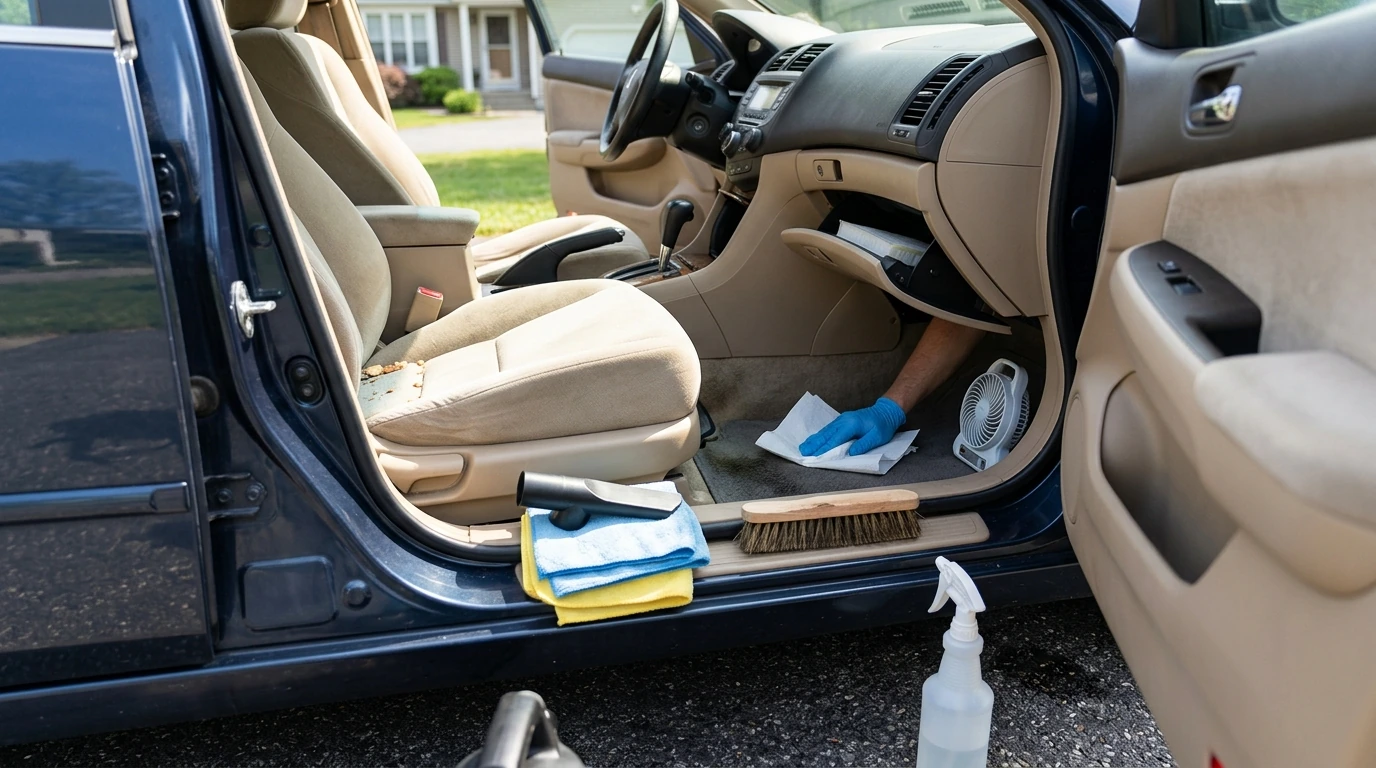
Car odors usually come back for one reason: the source wasn’t removed—only covered up. A lasting reset means finding where smells live (fabric, vents, moisture pockets, and forgotten spills), cleaning in the right order, drying fully, and preventing re-contamination. The steps below follow an easy system that works for everyday funk, food smells, smoke residue, pet odors, and musty “wet car” air.
Why car smells keep returning
Most “mystery” odors are predictable once you know what holds smell and what spreads it. The difference between a quick improvement and a lasting fix is whether you remove what’s feeding the odor.
- Odors cling to porous materials: seats, headliner, carpet padding, door cards, and trunk liners hold oils and bacteria.
- Moisture is the multiplier: damp carpet padding and A/C condensation allow mildew and microbial growth.
- Airflow spreads the problem: HVAC ducts and the cabin air filter can re-seed smells even after surfaces look clean.
- Cover-ups fail: heavy fragrances mix with existing odors and can make the cabin feel “chemical” without solving the cause.
Odor source checklist: find it before you clean
Before you buy another air freshener, do a quick diagnosis. It saves time and prevents you from treating the wrong area.
- Do a “hot car test”: after the car sits in sun for 20–30 minutes, open the door and identify where the smell hits first (front footwell, rear seats, trunk, vents).
- Check moisture zones: lift floor mats, press carpet with a paper towel, and inspect under seats and in the spare-tire well for dampness.
- Look for hidden organics: food under seats, spilled drinks in cupholders/console seams, pet hair in seat rails, and gym bags in the trunk.
- Inspect the HVAC: note if odor is strongest when the fan turns on; that points to the cabin filter, evaporator box, or ducts.
Common odors and the most likely source
| Odor | Likely source | Best first move |
|---|---|---|
| Musty/mildew | Damp carpet padding, A/C evaporator, cabin filter | Dry thoroughly; replace cabin filter; clean vents/evaporator area |
| Food/garbage | Under seats, cupholders, door pockets, trunk | Remove debris; vacuum crevices; enzyme clean spills |
| Smoke | Headliner, fabric, plastics, HVAC | Deep clean surfaces; replace cabin filter; consider ozone treatment as a final step |
| Pet | Carpet, upholstery seams, hair in rails | Vacuum with crevice tools; enzyme treatment; wash removable covers |
| Sour drink spill | Carpet padding, seat foam | Extract with upholstery cleaner; repeat until towel comes up clean |
The fresh interior reset: a simple order of operations
This sequence is designed to keep you from re-contaminating clean areas and to stop odors from “reblooming” as the cabin warms up.
- Step 1 — Remove everything: trash, mats, seat covers, trunk organizers, and any fabric items that can be washed separately.
- Step 2 — Dry first if needed: if carpet is damp, prioritize airflow and dehumidifying; cleaning over moisture locks odors in.
- Step 3 — Vacuum like detailing: use crevice tools for seat rails, between cushions, under pedals, and along trunk edges.
- Step 4 — Clean hard surfaces: wipe plastics, vinyl, steering wheel, and cupholders; odors often ride on sticky films.
- Step 5 — Treat fabrics: use an upholstery/carpet cleaner and extract; for biological odors (food/pet), use an enzyme cleaner and allow dwell time.
- Step 6 — Address the HVAC: replace the cabin air filter; clean intake area; run fan with windows down to purge.
- Step 7 — Neutralize (not perfume): after sources are removed, use a true odor neutralizer; avoid heavy fragrance as the main solution.
- Step 8 — Final dry and air-out: leave doors open in a safe area or run a fan/dehumidifier until fabrics are completely dry.
For musty situations involving lingering dampness or suspected mold, the EPA and CDC guidance on moisture control and cleanup is a solid reference point: EPA mold resources and CDC mold basics and cleanup.
Deep-clean targets that are easy to miss
If the cabin smells fine at first but turns sour the next hot afternoon, one of these spots is often the reason.
When to use baking soda, charcoal, enzymes, or ozone
Keep it fresh: prevention habits that actually work
A guided system to follow step-by-step
If you want a structured walkthrough you can reuse every time the cabin starts to turn, follow Eliminating Car Odors for Good – A Practical Guide on How to Remove Odors from Your Car, Fresh Interior Reset, Easy Cleaning System. It’s designed as a checklist so the most common comeback causes don’t get skipped: hidden moisture, fabric padding contamination, and HVAC recirculation.
For pet-related funk, reducing odor at the source (especially after trips to the vet or during litter changes) helps the whole home smell cleaner before it ever gets into your seats and carpet. A practical option for mess control is the Large Capacity Semi-Closed Cat Litter Box with High Sides & Scoop.
FAQ
Why does my car smell bad again a few days after cleaning?
A hidden source is usually still active—most often damp carpet padding, seat foam, trunk moisture, or a contaminated cabin air filter. Confirm everything dried fully, re-check for leaks, and address HVAC recirculation so odors don’t get blown back into the cabin.
What’s the fastest way to remove a musty smell from car AC vents?
Replace the cabin air filter first, then clean the cowl/intake area and dry out the system by running the fan with A/C off for a few minutes at the end of drives. If mustiness persists, the evaporator area may need targeted cleaning.
Is ozone safe for removing smoke odors from a car?
Ozone can help after thorough cleaning, but it must be used with strict precautions: no people or pets in the car during treatment, follow device instructions exactly, and air the vehicle out completely afterward. It should never replace physical cleaning and full drying.











Leave a comment