Etsy Listing Tags: How to Choose the Best 13
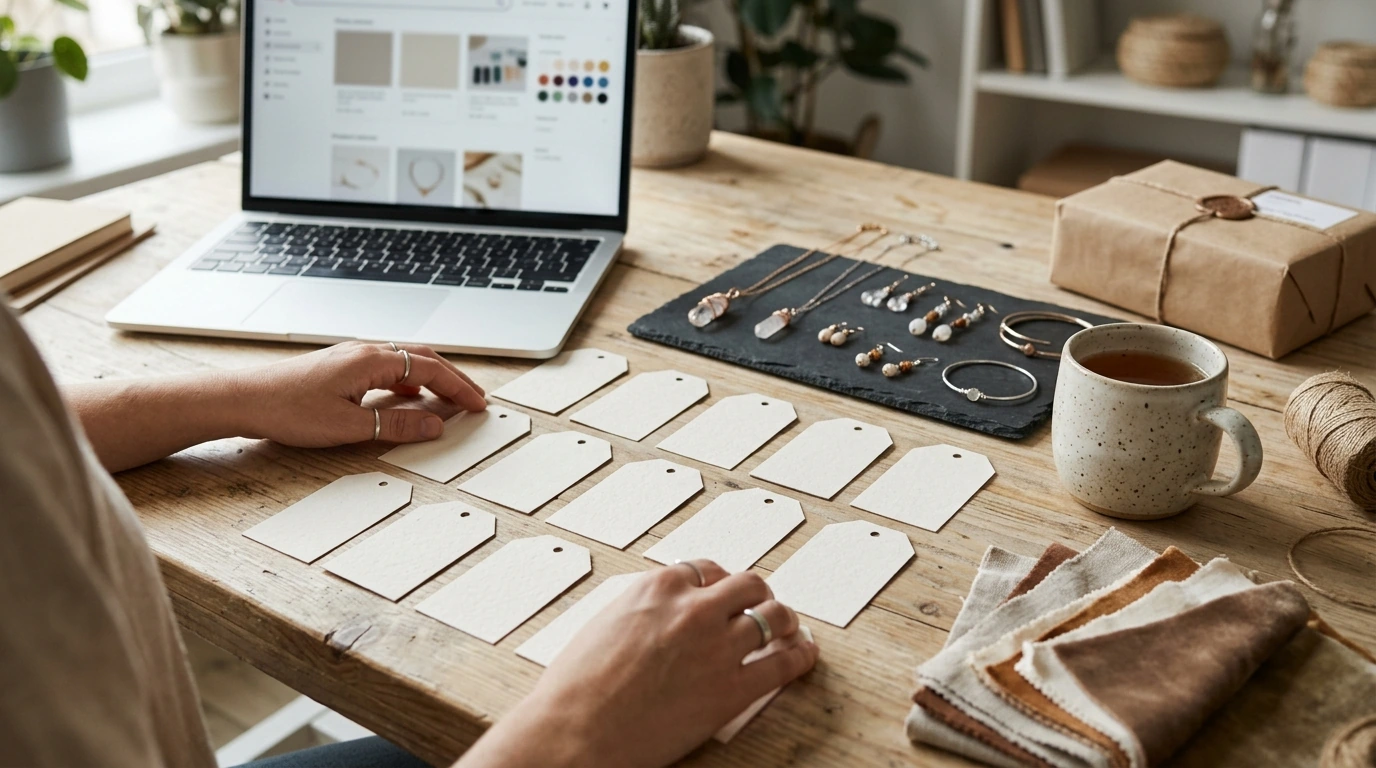
What tags should I put on my Etsy listing?
Use tags that describe exactly what you’re selling in the same words your shopper would type. Our team’s goal is to cover the most important ways someone might search for your item—without wasting space on repeats or vague terms. Etsy gives you 13 tags, and each one is a chance to match a different search phrase.
How to choose strong Etsy tags (our store approach)
1) Start with the “core identity” of the item
Pick 2–4 tags that state the product type and the primary style or function (for example: “soy candle,” “minimalist wall art,” “beaded bracelet”). If your item has a defining theme (boho, gothic, mid-century, cottagecore), use it.
2) Add long-tail phrases shoppers actually use
Instead of single words like “gift,” use specific phrases such as “gift for mom,” “teacher gift,” or “housewarming gift.” Long-tail tags help you show up for more detailed searches and can fit naturally with how people shop.
3) Cover materials, size, and key features
Include material and feature tags that matter to buyers: “sterling silver,” “solid oak,” “refillable,” “engraved,” “hypoallergenic.” If size drives the purchase decision, add it in tag form (like “small hoop earrings” or “8×10 print”).
4) Use occasion and recipient tags
Occasions and recipients can be high-intent: “birthday gift,” “bridal shower,” “new baby,” “gift for him,” “gift for couple.” Choose the ones that truly fit your product so you attract the right shoppers.
5) Avoid duplicates and near-duplicates
Don’t spend multiple tags on the same idea (like “silver ring” and “ring silver”). Also skip tags that are already covered by your categories and attributes when you could use that space to add a new angle. For a deeper breakdown of a full 13-tag strategy, see our guide here: https://ruleno.com/guide-etsy-tags-titles-attributes-13-tag-strategy/.
FAQ
Do Etsy tags need to match my title exactly?
No. It’s helpful when wording overlaps, but your tags can expand beyond your title to include materials, occasions, recipients, and alternate phrases shoppers use.








Leave a comment