Sedan vs SUV vs Truck: Choose the Right Fit Fast
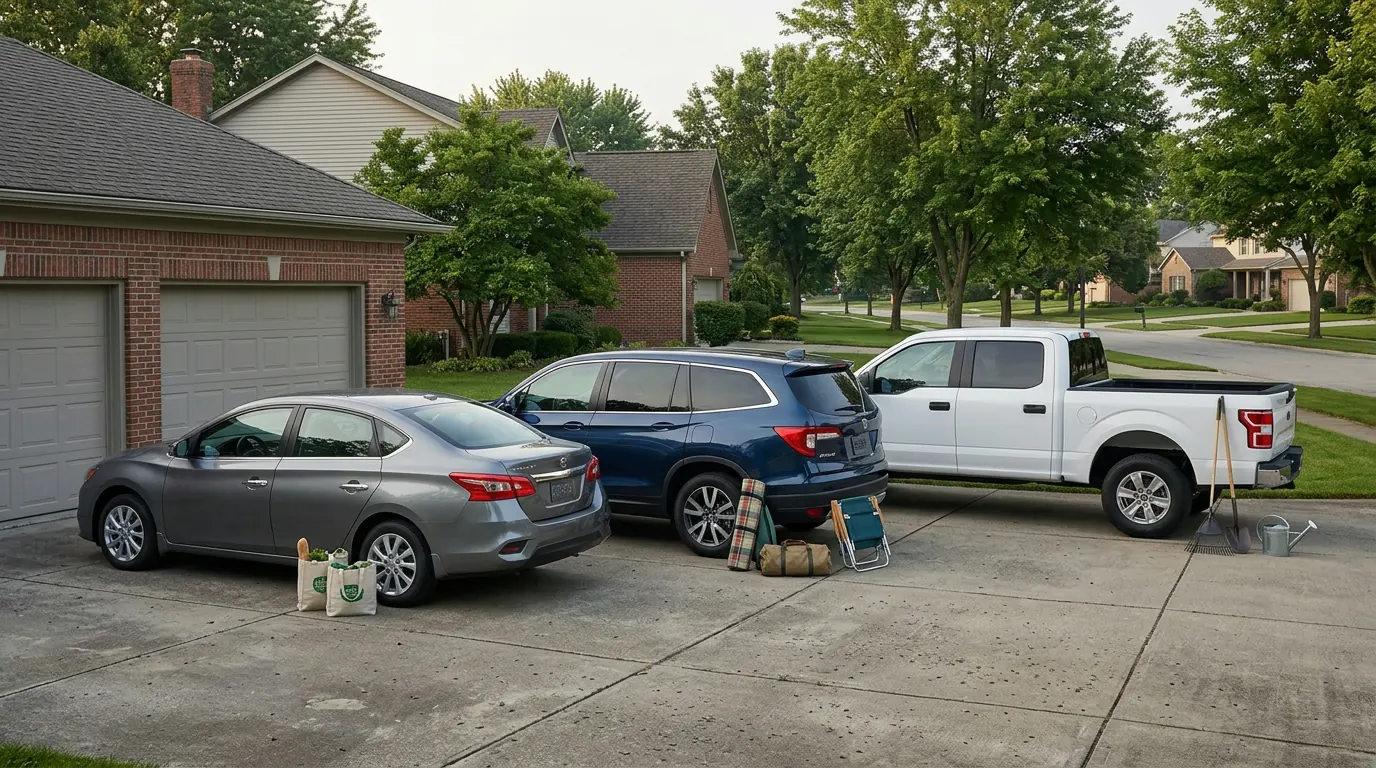
Sedan, SUV, or Truck: What Fits You Best?
Choosing between a sedan, SUV, or truck gets a lot easier when the decision starts with real life: your commute, parking, passengers, weather, weekend plans, and the kind of stuff that actually ends up coming home with you. Our team put this guide together to lay out the practical trade-offs in plain terms, then give you a simple way to match a vehicle type to how you’ll use it day to day.
Start With Your “Weekday vs Weekend” Reality Check
Before you compare trims and features, get clear on what your typical week looks like.
- Commute and road time: frequent highway miles tend to favor comfort, stability, and efficiency; stop-and-go city driving makes easy parking and tight turning more valuable.
- Passengers: count who rides with you regularly (not the once-a-year road trip). Think about legroom and whether you’ll be installing car seats.
- Cargo needs: separate everyday bags and groceries from bulky gear (sports, instruments, DIY supplies) and from true heavy-duty hauling (materials, trailers).
- Weather and roads: snow, steep driveways, gravel roads, and flooding risk can push you toward extra clearance or available all-wheel drive.
- Parking and maneuvering: garage height, street parking, and turning radius are “daily pain or daily ease” factors.
- Budget beyond purchase price: fuel, tires, insurance, maintenance, and depreciation can change what “best value” really means.
When a Sedan Fits Best
A sedan is often the easiest vehicle to live with when your driving is mostly paved roads and your cargo is usually manageable.
Best for
- Commuters, city/suburban drivers, small families, and anyone prioritizing fuel economy and easy handling
Strengths that show up every week
- Typically lower running costs (fuel and tires)
- Easier parking and generally more nimble maneuvering
- Quieter, less fatiguing ride at speed in many models
- Stable everyday handling (especially on highways)
Watch-outs
- Less ground clearance for deep snow or rough roads
- Limited cargo height for big boxes (a trunk can be deep but not tall)
- Rear-seat car-seat space varies a lot by model
What to check before you buy: don’t just compare trunk volume—check the trunk opening size, rear-seat headroom, and whether the rear seat folds in a way that actually helps you load occasional larger items.
When an SUV Fits Best
If you regularly combine passengers plus gear, or you deal with mixed weather, an SUV’s flexible layout can be the sweet spot.
Best for
- Families needing adaptable space, drivers dealing with winter conditions, and anyone who frequently carries taller cargo
Strengths that matter in daily use
- Higher seating position for visibility in traffic
- Easier loading for bulky items (boxy cargo areas help)
- Many choices with all-wheel drive and extra ground clearance
Watch-outs
- Fuel and tire costs often run higher than a comparable sedan
- Some models trade crisp handling for a taller center of gravity
- Third-row seating can shrink cargo space more than expected
When a Truck Fits Best
Best for
Strengths
Watch-outs
Cost, Comfort, and Safety: The Practical Trade-Offs
- Fuel and operating costs: size and weight typically increase fuel use, and larger tires can raise replacement costs. For quick comparisons, use FuelEconomy.gov.
- Insurance: rates vary by model and driver profile—getting quotes before you commit can prevent surprises.
- Comfort: prioritize seat support on longer drives, cabin noise at speed, and how easy it is to get in and out multiple times a day.
- Safety priorities you can compare quickly: crash-test results and driver-assistance availability. Check independent ratings at IIHS and NHTSA.
- Visibility: bigger vehicles can create larger blind spots; confirm mirror coverage and whether blind-spot monitoring is available.
- Resale and flexibility: the “best” choice usually matches your most common use—avoid paying daily for capability you won’t use.
Decision Matrix: Match a Vehicle Type to Your Real Use
Quick Match Guide: Sedan vs SUV vs Truck
| Your most common need | Best fit | Why it tends to work |
|---|---|---|
| Daily commuting + easy parking | Sedan | Efficient, simple to maneuver, typically lower running costs |
| Family passengers + flexible cargo | SUV | Fold-flat space, easier loading for bulky items, available AWD |
| Towing/hauling heavy or dirty gear | Truck | Payload/bed utility and towing setups built for work and gear |
| Snowy winters + mixed city/highway driving | SUV (or AWD sedan) | Extra clearance and AWD options can reduce stress in bad weather |
| Occasional big items, mostly normal driving | Sedan or compact SUV | Avoid paying daily for capabilities used rarely |
Tools We Keep Handy
- Sedan, SUV, Or Truck, What Fits You Best? – The Ultimate Guide to Choosing Your Perfect Vehicle
- How to Ask AI for Help: Smart Ways to Ask AI for Help – A Digital Guide for Effective AI Interaction
FAQ
Is an SUV always safer than a sedan?
No—safety depends on crash-test performance and safety tech, not just size. Taller vehicles can have a higher rollover risk in some scenarios, so comparing IIHS/NHTSA results by model is the most reliable approach.
Do most people really need a truck for weekend projects?
Often, no—if you only haul big loads a few times a year, renting a truck or trailer can cost less than paying higher fuel and tire costs every week. A truck makes the most sense when towing, hauling, or dirty gear is a regular need and payload/towing ratings match what you actually carry.
Should all-wheel drive be a must-have?
All-wheel drive can help you get moving on slippery surfaces, but it doesn’t replace good tires or safe speeds. It can add cost and reduce fuel economy, so it’s best to match AWD to your climate, hills, and road conditions rather than treating it as automatic.












Leave a comment