Multilevel Cat Tree: Double Condos, Perch & Scratcher
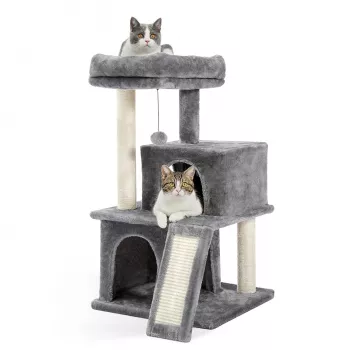
Multilevel comfort and enrichment in one home base
Cats do best when their home includes vertical space, a place to retreat, and a safe scratch zone. Our multilevel cat tree brings those everyday needs together with double condos for quiet downtime, a spacious perch for lookout naps, and a dedicated scratching post to help redirect claws away from furniture. It’s a straightforward way to turn one corner of your room into a cat-friendly routine: climb, lounge, scratch, repeat.
What this cat tree adds to a cat’s daily routine
When your cat has a consistent “home base,” you’ll often see more relaxed resting and less random scratching around the house. Here’s what a multilevel setup supports day to day:
- Vertical movement for natural climbing and hopping, especially helpful when indoor floor space is limited.
- Two enclosed condos that support privacy, decompression, and uninterrupted naps.
- A spacious perch that works as a lookout point for watching the room, windows, or household activity.
- A built-in scratching post that encourages healthy claw maintenance and full-body stretching.
- One dedicated “cat zone” that can reduce competition over favorite spots when more than one cat shares your home.
These needs line up with widely used feline environment guidance that emphasizes perching, hiding, and appropriate scratching outlets as core resources in the home (see the American Association of Feline Practitioners’ environmental needs guidelines).
How to decide if double condos are the right choice
Double condos aren’t just “extra space”—they’re a practical way to give your cat options without adding multiple bulky pieces of furniture. They’re especially helpful in these situations:
- Multi-cat homes: separate hideaways can reduce crowding and help cats self-regulate distance.
- Shy or newly adopted cats: enclosed spaces can make a room feel safer while confidence builds.
- Cats that alternate between social time and solitude: condos provide an “off switch” without leaving the room.
- Homes with dogs or active kids: a condo gives a protected spot that’s still part of the household.
Quick fit check: common needs and what to prioritize
| Home or cat need | What to prioritize | How this cat tree supports it |
|---|---|---|
| A calmer space for naps | Enclosed resting areas | Double condos create two quiet options for retreat |
| A reliable lookout spot | A stable, open-top lounging area | Spacious perch supports lounging and room-watching |
| Less scratching on furniture | A dedicated scratch surface in a high-traffic spot | Scratching post encourages an easy habit swap |
| More activity indoors | Multiple levels for stepping and climbing | Multilevel layout invites short bursts of play throughout the day |
| Sharing with another cat | More than one resting zone | Two condos help avoid “one favorite spot” conflicts |
Placement tips that help cats actually use it
Even the best cat tree works better when it’s placed where your cat already wants to be. Our team recommends starting with “high-value” locations and letting your cat opt in.
- Put it where your cat already spends time: near a window, beside a couch, or along a common walkway—cats like to observe the room.
- Keep it away from sudden disruptions: slamming doors and noisy appliances can make condos feel less safe.
- If furniture scratching is the issue: place the tree close to the scratched item first; after the habit shifts, move it gradually if needed.
- Make week one easy: add a familiar blanket in a condo and sprinkle catnip or place a favorite toy on the perch.
- For multi-cat homes: avoid “dead ends” in tight corners; leaving approach space helps reduce tension around shared resources.
For more on reducing stress and preventing common behavior issues with smart setup choices, the ASPCA’s cat behavior tips are a helpful reference.
Making the scratching post work (without constant redirecting)
Scratching is a normal, necessary behavior—your goal is to make the right option the easiest option. A built-in post works best when it becomes part of your cat’s daily rhythm.
- Encourage full-body stretches: cats prefer scratch zones where they can extend upward and lean in.
- Pair scratching with routine moments: after naps, meals, and play are times cats naturally scratch.
- Reward the right target: a small treat or gentle praise immediately after using the post helps the habit stick.
- Keep claws comfortable: regular nail trims can reduce snagging and help cats enjoy scratch time instead of avoiding it.
If you’d like a deeper understanding of why cats scratch and how to support the behavior appropriately, see International Cat Care’s scratching guidance.
Who this multilevel setup suits best
A simple setup checklist for day one
In-stock picks from our store
- Multilevel Cat Tree with Double Condos, Spacious Perch & Scratching Post
- How to Ask AI for Help: Smart Ways to Ask AI for Help – A Digital Guide for Effective AI Interaction
- Smart Eating in Pricey Places – Travel Food Budget Guide (Digital Download)
FAQ
Is a multilevel cat tree good for two cats?
Yes—multiple levels help each cat choose distance, and separate condos offer two private retreat options when they want uninterrupted rest. You’ll still get the best results when you also provide other shared-home resources elsewhere (like additional resting spots, water, and litter boxes) to reduce guarding.
How do you get a cat to use the scratching post instead of the couch?
Start by placing the tree next to the couch area your cat already scratches, then reward your cat immediately after they use the post. Scratching is most likely after naps, meals, and play, so those are the easiest moments to reinforce the new target.
Where should a cat tree be placed in a home?
Place it near a window or a social area where your cat likes to observe the household, and keep it away from loud, sudden disruptions. If you’re retraining scratching behavior, positioning it close to the current “problem” scratch spot helps the new habit form faster.











Leave a comment