Fall Layering Made Easy: Capsule Staples & Outfit Formulas
Effortless Fall Layers for Every Outfit
Fall outfits feel easiest when layers do the work: a breathable base, a warm middle, and an outer layer that adapts to wind or drizzle. The right combinations add comfort without bulk, help outfits look intentional, and make a small wardrobe feel bigger. Use the sections below to build mix-and-match layer formulas for workdays, weekends, travel, and last-minute temperature swings.
The three-layer method that works for almost any fall day
Most “what do I wear today?” moments get easier when you build from the inside out.
1) Base layer (comfort + temperature control)
Your base sits next to skin, so prioritize softness, breathability, and a smooth fit that won’t bunch. Think fitted tees, thin long-sleeves, and lightweight turtlenecks that slide neatly under knits and jackets.
2) Mid layer (the warmth dial)
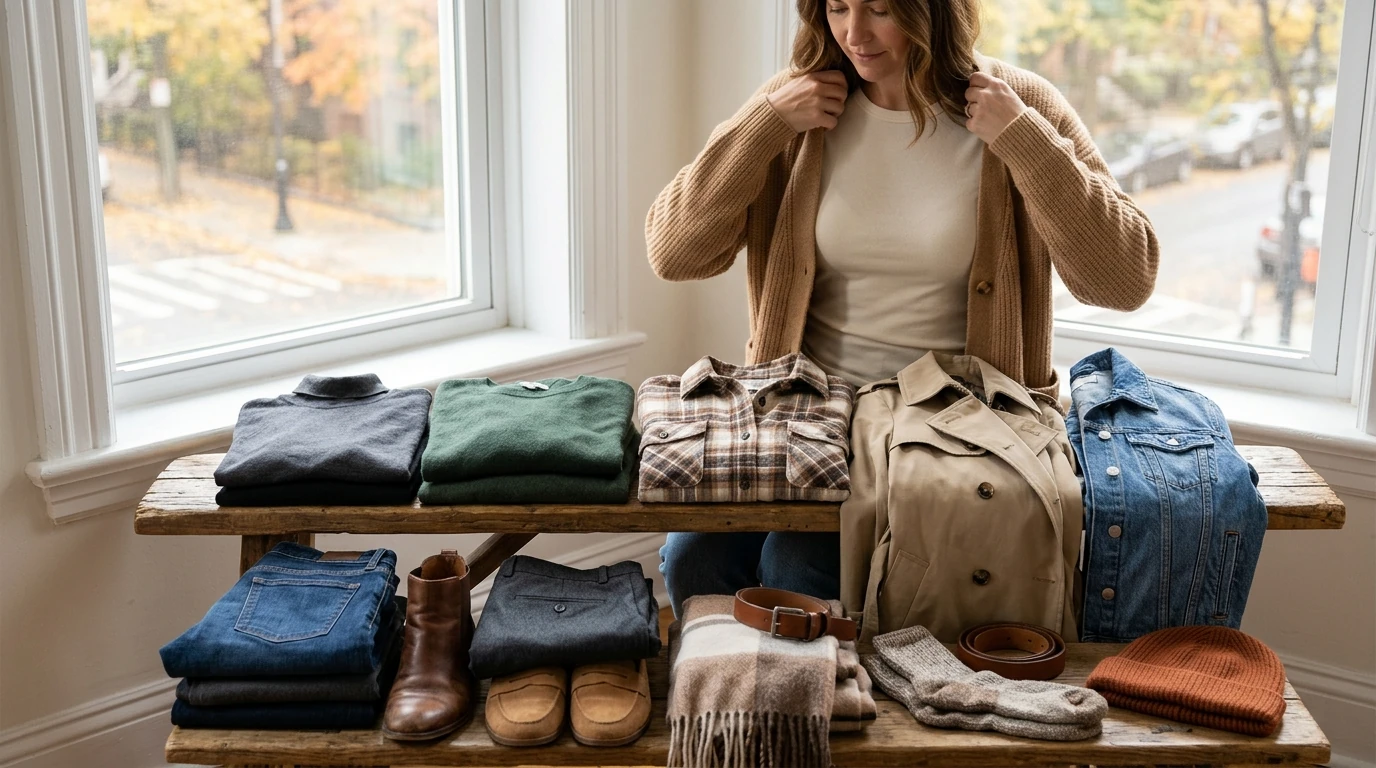
This is the removable piece that makes fall so flexible: cardigans, flannels, fine-gauge sweaters, half-zips, and quilted liners. If you’ll be indoors a lot, let the mid layer be the “outfit” so you still look put-together when the coat comes off.
3) Outer layer (weather protection + structure)
Your outer layer blocks wind and handles light rain—denim jackets, trenches, lightweight puffers, and wool coats. A simple rule that prevents bulk: “thin + thin + structured” (like a fitted tee, a light knit, and a tailored jacket).
Fall-ready wardrobe essentials that layer with everything
A versatile fall closet isn’t about owning more; it’s about owning the right categories in repeat-wear colors and easy silhouettes.
If you want a quick, step-by-step reference you can revisit all season, the Effortless Fall Layers for Every Outfit: Ultimate Guide to Layering, Seasonal Styles, and Wardrobe Essentials is an easy grab-and-go companion for building outfits from a small set of staples.
Fabric and texture choices that prevent overheating (and pilling)
- Breathable bases: cotton blends, modal, and lightweight merino help regulate temperature when you bounce between chilly mornings and heated offices. REI’s overview of layering basics offers a helpful framework that applies to everyday dressing, not just outdoor gear.
- Warm mids: wool, alpaca blends, and brushed flannel insulate well; choose finer knits for cleaner layering under jackets.
- Outer protection: tightly woven cotton (trench), denim, waxed canvas, or water-resistant shells handle wind and light drizzle.
- Balance texture: pair one “cozy” piece (chunky knit or fleece) with smoother companions to keep the silhouette polished.
- Reduce friction: keep the innermost layer smooth, and avoid stacking multiple fuzzy knits to minimize pilling and static.
To extend the life of wool and wool-blends, follow fiber-specific washing and drying guidance like the tips from The Woolmark Company.
Layering formulas by temperature and activity
Quick layer formulas for common fall conditions
| Conditions | Base Layer | Mid Layer | Outer Layer | Finishing Touch |
|---|---|---|---|---|
| 60–70°F, sunny; lots of indoor time | Fitted tee or tank + light long-sleeve | Open cardigan or button-down worn as a shirt-jacket | Optional denim jacket | Loafers + minimal scarf (optional) |
| 50–60°F, breezy commute | Long-sleeve crewneck or thin turtleneck | Light sweater or flannel | Trench or denim jacket | Ankle boots + medium socks |
| 40–50°F, evening plans | Thin turtleneck or thermal top | Merino sweater or knit vest | Wool coat or lightweight puffer | Scarf + structured bag |
| Rainy and cool | Breathable long-sleeve | Cardigan or fleece-lite zip | Water-resistant trench or shell | Water-friendly boots + umbrella |
| Travel day with temperature swings | Soft tee + breathable long-sleeve | Zip hoodie or cardigan | Packable jacket | Large scarf that doubles as a wrap |
Outfit building: 7 mix-and-match layer combos that look intentional
Color and proportion tricks for layering without bulk
Accessories that act like micro-layers
- Scarves: lightweight for indoor/outdoor transitions; thicker for evening wind.
- Socks and tights: a swap from sheer to wool-blend can change comfort dramatically.
- Hats and gloves: crisp mornings feel easier without jumping straight to a heavier coat.
- Belts: define shape over cardigans, shirt-jackets, and sweater dresses.
- Jewelry: choose one focal piece so layered collars don’t feel busy; a small personal detail like Personalized Gold-Plated Alphabet Rings pairs well with turtlenecks, crewnecks, and long-sleeves without snagging on knits.
Care and storage so layers keep their shape all season
A simple checklist for building a fall layering capsule
If you’re dressing for real cold snaps, it can help to know the basics of how low temperatures affect the body; the CDC’s overview of cold stress is a practical reference for planning ahead.
FAQ
How many layers are ideal for fall weather?
Two to three layers is the sweet spot: a breathable base, a warm mid layer, and an outer layer for wind or light rain. The simplest adjustment is making the mid layer removable so you can adapt to indoor heat and midday sun.
How can outfits stay warm without looking bulky?
Start with a thin, fitted base, add a fine-gauge knit mid layer, and finish with a structured outer layer that holds its shape. Use the 1-2-1 proportion rule and avoid stacking multiple chunky or fuzzy textures that create friction and volume.
What are the most versatile fall layering pieces to buy first?
A fitted long-sleeve, a cardigan, and a trench or denim jacket mix with jeans, skirts, dresses, and workwear without much effort. These pieces also let you rework the same outfit for different temperatures by swapping just one layer.











Leave a comment