48-inch Retro Carved Sideboard: Drawers + Doors Storage
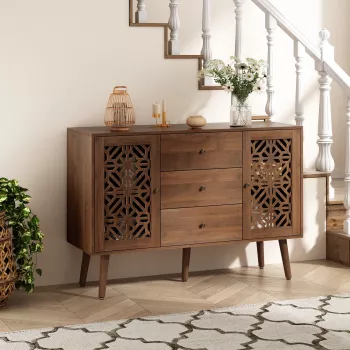
48″ Retro Hollow Carved Sideboard Buffet Cabinet with Drawers and Doors: a statement storage piece that works hard every day
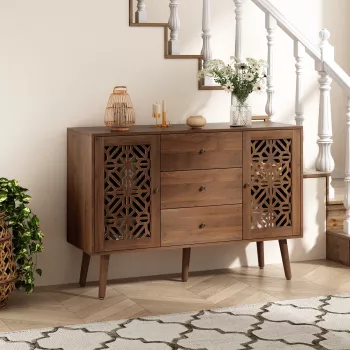
A sideboard earns its place when it solves the daily shuffle—serveware that needs a home, table linens that never stay folded, and the “set it down for now” items that pile up near the dining room. Our team loves how the 48″ Retro Hollow Carved Sideboard Buffet Cabinet with Drawers and Doors brings storage and personality together with a carved, airy look that adds texture without feeling heavy in the room.
What makes this retro hollow carved sideboard feel special in a room
- Retro silhouette that reads warm and collected rather than stark or ultra-modern—easy to blend with both vintage and updated spaces.
- Hollow carved detailing adds depth and shadow, giving your room a focal point without turning every surface into a pattern.
- 48 inches is a practical “anchor” size: wide enough to ground a wall, more flexible than oversized buffet cabinets.
- Drawers + doors create a balanced storage mix—you can hide the bulky items and keep the grab-and-go essentials within reach.
- Host-ready, day-to-day friendly: set up a buffet on top when you’re entertaining, then return it to clean-lined storage the next morning.
A practical storage plan: what to put in the drawers vs. behind the doors
The easiest way to keep a sideboard working is to store by “how often you touch it.” Drawers shine for the small items that disappear on shelves, while the cabinet space behind doors is ideal for larger pieces you don’t want on display.
- Drawers: napkin rings, tea lights, serving tools, corkscrews, coasters, or even batteries for flameless candles.
- Behind doors: platters, salad bowls, pitchers, seasonal linens, and extra glassware.
- Create zones: a hosting zone, a coffee/tea zone, and a table-linen zone keeps everything intuitive.
- Place everyday items at hand height and seasonal/backup items lower so you’re not rummaging.
| Zone | Best storage spot | Examples of what to store | Tip to keep it tidy |
|---|---|---|---|
| Hosting essentials | Drawers | Bottle opener, corkscrew, serving utensils, candle lighters | Add small trays or dividers so tools don’t shift |
| Tabletop linens | Behind doors | Tablecloths, placemats, cloth napkins | Fold by set and stack vertically if possible for quick grabs |
| Serveware | Behind doors | Platters, bowls, cake stand, pitcher | Group by occasion (daily vs. guests) to reduce clutter |
| Coffee/tea corner | Drawers + behind doors | Sweeteners, stir spoons, mugs, pods/tea tins | Keep a single “refill bin” so restocking is one step |
Where this buffet cabinet fits best: room-by-room ideas
- Dining room: the classic setup—serve from the top, store plates and linens inside, and keep the table clear.
- Entryway: a calm landing zone for keys and mail, while doors hide shoes, scarves, or umbrellas (bins inside make sorting painless).
- Living room: a console-style storage solution for board games, media accessories, throws, and candles.
- Kitchen overflow: stash bulky bakeware or small appliances that crowd your cabinets; keep counters open for prep.
- Home office: drawers for supplies, doors for paper reams and tech boxes—organized, without the look of a filing cabinet.
Styling the carved look: how to make it feel intentional (not themed)
- Let the carving be the texture and keep what you place on top simpler: a tray, a vase, or a lamp instead of many small items.
- Mix eras on purpose: pair the retro vibe with modern lighting or clean-lined frames so the room stays current.
- Repeat materials for cohesion: echo nearby tones with a runner, woven basket, or ceramics.
- Keep the top functional: leave one side open for serving, a coffee setup, or your daily drop-zone items.
- If you’re using it as a bar/buffet, group bottles and glassware on a single tray to reduce visual clutter.
Everyday use details that matter: surfaces, traffic flow, and clearances
Care that keeps a retro sideboard looking fresh
If you’re curious about how wood behaves over time (movement, moisture, durability), the U.S. Forest Service Wood Handbook is a solid reference our team trusts for fundamentals.
Setup and safety checklist for a cabinet with doors and drawers
- Assemble on a soft surface to prevent scratches, and tighten hardware evenly so doors align smoothly.
- Re-check fasteners after initial use; furniture can settle slightly after moving and loading.
- Distribute weight across shelves instead of stacking heavy items in one corner.
- Consider anchoring for added safety, especially in homes with kids or pets. The CPSC tip-over safety guidance is a helpful overview of risk reduction.
More from our store
- 48″ Retro Hollow Carved Sideboard Buffet Cabinet with Drawers and Doors
- How to Ask AI for Help: Smart Ways to Ask AI for Help – A Digital Guide for Effective AI Interaction (great for planning a room refresh, making shopping checklists, or building an organizing routine you’ll actually stick to)
FAQ
What’s the best way to organize a sideboard with both drawers and doors?
Use drawers for small, frequently used items (tools, lighters, coasters) and reserve the space behind doors for larger pieces like platters and linens. Organize by zones—hosting, coffee/tea, and table linens—and use trays or dividers so items don’t shift.
Can this type of buffet cabinet work outside the dining room?
Yes—this format works well as an entryway console for mail and daily drop-zone items, a living room storage piece for games and throws, or kitchen overflow for bulky cookware. In a home office, drawers can hold supplies while doors hide paper and tech boxes.
How should a carved cabinet front be cleaned without damaging the finish?
Dust regularly with a soft, dry cloth to keep grooves from collecting buildup. For spots, use minimal moisture on a lightly damp cloth and dry immediately; avoid harsh cleaners, and use a soft brush if you need to reach crevices.









Leave a comment